
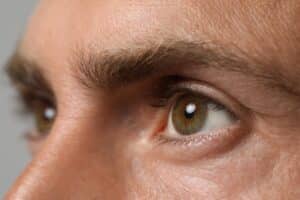
The orbit is the bony structure that surrounds and protects your eye. Within this small space are several important tissues that work together to support vision and eye movement. When a tumor develops in the orbit, it can place pressure on these structures and lead to symptoms that often start subtly but become more noticeable over time.
Dr. Daniel Tresley, MD, an oculofacial plastic surgeon serving Northbrook, Illinois, specializes in conditions that affect the delicate structures around the eyes. As a Board-Certified Ophthalmologist and Clinical Instructor at Northwestern University, Dr. Tresley has extensive experience in diagnosing and treating complex orbital conditions. His work focuses on protecting eye health and restoring normal function when problems develop inside the orbit.
What Is an Orbital Tumor?
An orbital tumor is a growth that forms within the eye socket. These growths can develop in the tissues surrounding the eye, including muscles, glands, nerves, or fat. Some tumors are benign, meaning they do not spread to other parts of the body, while others can be malignant and require prompt treatment.
Because the orbit is a tight space filled with critical structures, even a small growth can create noticeable changes in how the eye looks or functions.
Common Orbital Tumor Symptoms
Symptoms of an orbital tumor often develop gradually as the growth begins to affect nearby structures. Some of the most common symptoms include:
- Swelling around the eye that does not go away
- A bulging or protruding eye
- Double vision or difficulty moving the eye
- Blurred or decreased vision
- Pressure or discomfort behind the eye
- Changes in eye position or alignment
- Drooping or swelling of the eyelid
These symptoms can occur for several reasons, not all of which involve tumors. Still, ongoing or worsening changes should always be checked by an experienced eye specialist.
When to Seek Medical Evaluation
Persistent swelling, changes buy Accutane online in vision, or unusual eye movement deserve careful attention. Diagnostic imaging, such as CT scans or MRI, helps determine what is happening inside the orbit and whether a growth is present.
Specialists trained in oculofacial surgery have detailed knowledge of the structures surrounding the eye and how conditions in this area affect vision and facial function.
Experienced Orbital Care in Northbrook
Dr. Daniel Tresley’s training in oculofacial plastic surgery also allows him to diagnose and treat complex orbital tumors while protecting vision and surrounding structures. He will help identify the right solution for you. To schedule a consultation with Dr. Daniel Tresley in Northbrook, IL, call 847-291-6900.